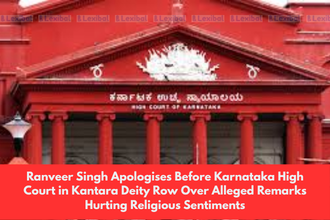
Ranveer Singh tendered an unconditional apology before the Karnataka High Court in proceedings arising out of a petition concerning alleged remarks linked to the depiction and cultural significance of a deity portrayed in the film Kantara. The apology was placed on record during hearings relating to complaints that statements attributed to the actor had hurt religious sentiments associated with traditional spirit-worship practices depicted in the film.
The development took place in a petition seeking directions for appropriate action against statements allegedly affecting the dignity of a locally revered deity tradition represented in Kantara, which is closely connected with coastal Karnataka’s Bhoota Kola ritual practices. Counsel appearing for the actor informed the Court that there was no intention to offend religious beliefs and that any perceived hurt was deeply regretted.
Case Title
Petitioner v. State of Karnataka & Ors.
(Proceedings concerning alleged remarks affecting religious sentiments linked to Kantara deity representation)
(Actor appeared through counsel before the Court)
Background of the Dispute
The controversy arose after objections were raised regarding statements attributed to Ranveer Singh in connection with the portrayal and cultural significance of the deity tradition featured in Kantara. Petitioners alleged that the remarks undermined the sanctity of ritual practices associated with Bhoota Kola, a centuries-old spiritual tradition widely respected in parts of Karnataka.
Following complaints submitted before authorities, the issue reached the Karnataka High Court through proceedings seeking judicial intervention. Petitioners requested appropriate action against statements alleged to be offensive to religious beliefs protected under Indian law.
The matter raised broader questions concerning the intersection between cinematic discourse, public commentary by celebrities, and protection of religious sentiments under statutory and constitutional frameworks.
What Happened Before the Karnataka High Court
During the hearing, counsel representing Ranveer Singh submitted before the Court that the actor had no intention of making statements that could hurt religious sentiments or disrespect regional traditions associated with the deity depicted in Kantara.
An unconditional apology was placed on record, clarifying that the actor respects India’s diverse cultural and spiritual traditions and regrets any misunderstanding arising from the remarks.
The Court recorded the submission and took note of the apology while considering the relief sought in the petition. The Bench indicated that such clarification from the concerned individual was relevant while evaluating the necessity of further directions in the matter.
Legal Issues Raised in the Petition
The proceedings engaged questions relating to protection of religious sentiments under provisions of the Indian Penal Code, 1860 (now substantially replaced by the Bharatiya Nyaya Sanhita, 2023), particularly those dealing with deliberate acts intended to outrage religious feelings.
Petitioners argued that public figures carry heightened responsibility when commenting on culturally sensitive subjects and must exercise caution while referring to traditional practices deeply embedded in local belief systems.
The submissions emphasized that ritual traditions like Bhoota Kola are not merely cinematic themes but living religious practices entitled to legal protection.
Cultural Context of the Kantara Deity Tradition
The film Kantara brought national attention to Bhoota Kola, a ritual performance tradition practised in coastal Karnataka involving spirit worship rooted in local folklore and temple customs. The depiction of the deity figure in the film generated widespread appreciation but also heightened sensitivity regarding public commentary on associated traditions.
Courts in India have previously recognized that religious practices and cultural rituals enjoy protection under Article 25 of the Constitution of India, subject to public order, morality, and health considerations.
The present proceedings reflected concerns that statements perceived as dismissive or inaccurate could affect community sentiments connected with these traditions.
Role of Apology in Judicial Proceedings Involving Religious Sentiment Cases
Indian courts frequently consider apologies tendered by individuals in cases involving alleged offences relating to religious sentiments, particularly where intent to offend is disputed. Such apologies may be taken into account while determining whether continuation of proceedings is necessary in the interests of justice.
Legal experts note that courts typically examine whether the apology is unconditional, voluntary, and supported by clarification regarding absence of malicious intent.
In the present case, the actor’s apology was placed before the Court through counsel during ongoing proceedings, indicating willingness to resolve concerns raised by petitioners.
Implications for Celebrity Speech and Cultural Sensitivity
The development highlights increasing judicial scrutiny of statements made by public figures concerning culturally significant subjects represented in cinema and media.
Legal observers note that courts are often called upon to balance freedom of expression under Article 19(1)(a) of the Constitution of India with statutory protections against acts perceived as hurting religious sentiments.
The apology recorded before the Karnataka High Court reflects the continuing importance of responsible public commentary in matters involving traditional belief systems and regional cultural practices.
The matter is expected to proceed further depending on the Court’s assessment of submissions placed on record by the parties and the legal issues raised in the petition.
Join Our WhatsApp Channel: Click here to Join