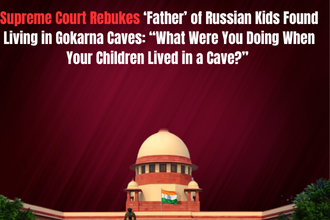
The Supreme Court of India has sought the response of the Union Government on a batch of petitions seeking extension of Scheduled Caste (SC) status to Dalit Christians and Dalit Muslims, reviving a long-pending constitutional debate on religion-linked caste recognition under Article 341 of the Constitution of India. The matter was taken up by a Bench considering challenges to the continued exclusion of converted Dalits from reservation benefits and statutory protections available to constitutionally recognized Scheduled Castes.
The petitions argue that caste-based discrimination continues even after conversion to Christianity or Islam and therefore exclusion from Scheduled Caste status violates equality guarantees under Articles 14, 15, and 21 of the Constitution. The Court indicated that the issue raises important constitutional questions requiring examination of both historical policy foundations and contemporary social realities.
Background of the Constitutional Challenge
Scheduled Caste status in India is governed by the Constitution (Scheduled Castes) Order, 1950 issued under Article 341, which originally restricted eligibility to persons professing Hinduism. Subsequent amendments extended recognition to Sikhs in 1956 and Buddhists in 1990.
However, Dalit Christians and Dalit Muslims continue to remain excluded from the Scheduled Caste category despite longstanding demands for inclusion. Several petitions filed before constitutional courts over the years have challenged this exclusion as discriminatory and inconsistent with the constitutional guarantee of equality.
The present batch of petitions seeks reconsideration of the constitutional validity of religion-based restrictions contained in the 1950 Presidential Order.
What the Supreme Court Observed
During the hearing, the Supreme Court observed that the issue involves complex constitutional, sociological, and policy considerations relating to caste identity, historical disadvantage, and the structure of reservation benefits.
The Bench directed the Union Government to clarify its position on whether exclusion of Dalit Christians and Dalit Muslims from Scheduled Caste status continues to remain justified in light of contemporary evidence regarding caste-based discrimination across religious communities.
The Court also examined submissions referring to earlier commission reports and expert committee findings addressing the persistence of caste-linked disadvantages among converted communities.
The matter has been listed for further hearing after receipt of the Union Government’s response.
Arguments Raised by Petitioners
Petitioners argued that caste discrimination in India is not limited to Hindu social structures and continues to affect individuals belonging to historically marginalized communities even after religious conversion.
It was submitted that denial of Scheduled Caste status to Dalit Christians and Dalit Muslims results in unequal treatment between similarly situated persons belonging to identical caste backgrounds but professing different religions.
Counsel appearing for the petitioners also relied on constitutional jurisprudence recognizing dignity, equality, and non-discrimination as core components of fundamental rights under Articles 14 and 21.
The petitions further contend that continuation of religion-based exclusion undermines the transformative objectives of reservation policies intended to address structural inequality.
Position of the Union Government in Earlier Proceedings
In earlier proceedings relating to similar issues, the Union Government had informed the Court that extension of Scheduled Caste status to additional religious groups requires detailed socio-economic evaluation and legislative consideration.
The Centre has previously relied on findings of commissions constituted to examine whether caste-based disabilities persist after conversion and whether extension of reservation benefits would affect the existing framework designed for constitutionally recognized Scheduled Castes.
The Court’s latest direction seeking a fresh response suggests that the issue remains under active constitutional scrutiny.
Legal Framework Governing Scheduled Caste Recognition
Recognition of Scheduled Castes under Article 341 is carried out through Presidential Orders subject to modification only by Parliament. Courts have consistently held that inclusion or exclusion from the Scheduled Castes list falls primarily within the legislative domain.
At the same time, constitutional courts retain jurisdiction to examine whether classification criteria underlying such recognition violate fundamental rights guarantees.
The present proceedings therefore raise questions concerning the relationship between parliamentary authority and judicial review in matters involving reservation policy and social justice legislation.
Implications for Reservation Policy and Equality Jurisprudence
The Supreme Court’s consideration of the issue is expected to have significant implications for reservation policy, minority rights, and equality jurisprudence in India.
Legal experts note that any change in the scope of Scheduled Caste recognition could affect access to education reservations, public employment quotas, and statutory protections under special legislation such as the SC/ST (Prevention of Atrocities) Act.
The outcome of the case may also influence broader debates concerning the relationship between caste identity and religion within India’s constitutional framework governing affirmative action policies.
The matter is likely to remain under close judicial examination in the coming hearings after the Union Government places its response on record.
Join Our WhatsApp Channel: Click here to Join