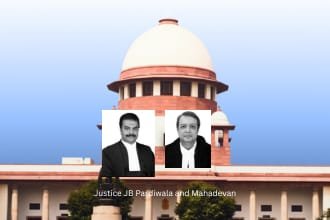
In a significant development, the Supreme Court of India on 26 September 2025 granted interim relief to Venu Gopalakrishnan—owner of an IT company located in Infopark, Kerala—by staying his arrest in a criminal case alleging rape and sexual harassment filed by a female employee.
Background of the Case
The case stems from a complaint by a woman who worked at the IT firm, accusing Mr. Gopalakrishnan (the petitioner) and certain co-accused (including company directors and employees) of sexually exploiting her. The complaint also alleges that co-accused threatened her with dire consequences, including death threats, if she pursued her grievance.
The complaint further claims that attempts were made to coerce the complainant into withdrawing her complaint before the Internal Complaints Committee (ICC), and there were efforts to tamper with digital evidence and delete incriminating material from her electronic devices.
The FIR was registered at the Infopark Police Station, and invokes provisions under the Bharatiya Nyaya Sanhita, 2023, including:
- Section 64 (punishment for rape),
- Section 74 (assault or use of criminal force to a woman with intent to outrage her modesty),
- Section 75 (sexual harassment),
- Section 351(2) (criminal intimidation), together with Section 3(5) (common intention).
Additionally, Section 67A of the Information Technology Act, 2000 has also been invoked, presumably due to allegations of tampering or deletion of digital evidence.
On 11 September 2025, the Kerala High Court, in a hearing before Justice Bechu Kurian Thomas, refused anticipatory bail to Venu Gopalakrishnan, though it did extend protection against arrest to other co-accused. The High Court judge, while noting the seriousness of the allegations, pointed out certain anomalies in the investigation and said that the allegations could not be dismissed as “wholly false” at that stage.
The accused, in his defense, contends that the allegations are fabricated and motivated. According to his version, the complainant and her husband are seeking a sum of ₹30 crores by making false accusations.
Supreme Court’s Order: Stay of Coercive Action
Upon receiving the petition (Special Leave Petition (Criminal) 15379/2025), a two-judge bench of the Supreme Court comprising Justice BV Nagarathna and Justice R Mahadevan considered the plea against the Kerala High Court’s order of refusal.
The Supreme Court issued notice to the State Government and the complainant, and importantly, stayed all coercive action (including arrest) against the petitioner, subject to his cooperation in the investigation.
In effect, while the court has not granted full bail yet, it has protected the petitioner from arrest until further orders so long as he cooperates with the ongoing probe.
Legal Significance and Analysis
This interim relief is consequential for several reasons:
- Balance between rights of accused and rights of complainant
The Supreme Court, in granting protection against arrest, balances the fundamental rights of an accused under Article 21 (protection of life and personal liberty) with the necessity of safeguarding the process of investigation. Courts often grant interim protection when there is a prima facie case to be made out, but also when the accused is likely to cooperate, and no immediate threat of tampering or fleeing is evident. - Cooperation condition
The condition that the petitioner “cooperate” with the investigation is critical. It means that any obstruction, non-compliance, or interference with probe may jeopardize this stay and expose him to coercive measures once again. - Not a grant of anticipatory bail
It must be clear that this relief is not equivalent to anticipatory bail; the full merits of the case remain before the court. The Supreme Court’s stay is interim and subject to further adjudication. The question of whether the High Court’s refusal of anticipatory bail should be overturned is pending. - Digital evidence and IT Act invocation
The invocation of Section 67A of the Information Technology Act indicates a digital dimension to the alleged misconduct (i.e. deletion or tampering of data). In recent years, courts have recognized the sensitivity and technical complexity of digital forensics and the need to preserve electronic evidence. This aspect may impose responsibilities on investigating agencies to conduct forensically sound procedures (seizure, imaging, maintaining chain of custody, etc.). - Use of the new penal code (Bharatiya Nyaya Sanhita, 2023)
The case is being prosecuted under the newly enacted Bharatiya Nyaya Sanhita, which replaced many older penal statutes. Interpretation of its provisions—especially the ones relating to sexual offences and common intention—will be a key dimension to watch as the case proceeds. - Ensuring fair investigation, avoiding abuse of power
The Supreme Court’s direction against coercive action sends a signal that courts will guard against misuse of power during investigations, especially when high-stakes allegations are involved. The decision underscores the importance of procedural propriety and fairness from the earliest stages.
What Happens Next?
- Replies and arguments: The State and the complainant must file replies to the SLP, engaging with the ground advanced by the accused.
- Interim hearings: Arguments on the maintainability of the plea, and whether the denial of anticipatory bail by the High Court was justified, will be heard.
- Further orders: The Supreme Court could evolve the stay into a grant of anticipatory bail (with stringent conditions), or could vacate the order, depending on counterarguments and materials.
- Investigation progress: The investigating agency must pursue forensic examination of digital devices, collect witness testimony, and prepare a charge sheet or closure report as may be dictated by facts.
- Trial stage: If a charge sheet is filed, the accused will face trial under relevant provisions. Given the gravity of the allegations, the case is likely to receive close judicial scrutiny at every stage.
Implications for Employers, Employees and the Legal Community
- Workplace sexual harassment and ICC obligations: This case may draw attention to how companies manage internal complaints, ICC findings, and possible interference or coercion in internal proceedings. It underscores the need for transparency, adherence to law (e.g. the Sexual Harassment of Women at Workplace (Prevention, Prohibition and Redressal) Act, 2013) and independence of inquiry.
- Digital forensics as critical evidence: Employers and employees must be aware that digital evidence (emails, messages, device histories) may be central to resolving disputes of this nature. Proper policies for data retention, audits, and forensic readiness may become more important.
- High value claims and counter-allegations: The defense’s counterclaim of an attempt to extort ₹30 crores points to a trend where serious allegations may be met with counterclaims of fabrication. Courts will need to parse through competing narratives and ensure that false or malicious allegations are identified without chilling genuine claims.
- Judicial oversight of police powers: The Supreme Court’s intervention demonstrates the judiciary’s role in supervising criminal procedure. This is a reminder to investigative agencies to follow due process, ensure records of procedure, and avoid arbitrary coercive actions.
Also Read
Supreme Court Rejects PIL Seeking Ban on Salman Rushdie’s The Satanic Verses
Delhi High Court: Arbitral Tribunals Can Order Share Transfers in Joint Ventures