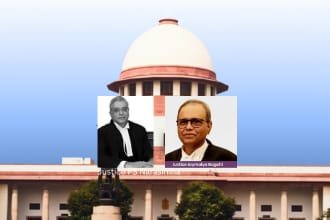
In view of the worsening air pollution levels in the national capital, the Supreme Court of India has advised lawyers and litigants to appear through video conferencing (VC) wherever possible. The advisory comes amid Delhi’s Air Quality Index (AQI) reaching ‘severe’ to ‘hazardous’ levels, raising serious public health concerns.
The Supreme Court Registry issued a circular dated December 14, 2025, requesting advocates and parties appearing in person to make appropriate use of the hybrid and video conferencing facilities provided by the Court. The advisory aims to ensure the smooth, safe, and uninterrupted functioning of judicial proceedings without compromising the health and safety of court stakeholders.
Supreme Court Registry Issues Circular on Virtual Appearances
According to the circular, lawyers and litigants may appear via video conferencing in matters listed before the Supreme Court, if it is convenient for them. The Registry emphasised that this step has been taken under the directions of the Chief Justice of India, Justice Surya Kant, keeping in mind the prevailing environmental conditions in Delhi.
The advisory reflects the Supreme Court’s continued effort to adapt court procedures to extraordinary circumstances, particularly when public health risks are involved. The Registry clarified that virtual participation must comply with all technical and procedural requirements already prescribed for online hearings.
Delhi Air Pollution and Judicial Functioning
Delhi has been grappling with dangerously high pollution levels for several weeks, with AQI readings frequently crossing into the ‘severe’ and ‘hazardous’ categories. Exposure to such air quality poses serious risks, including respiratory illnesses, cardiovascular problems, and long-term health complications.
Against this backdrop, the Supreme Court’s advisory acknowledges the practical difficulties faced by lawyers, litigants, court staff, and other stakeholders who are required to travel and remain physically present in court premises. By encouraging virtual appearances, the Court seeks to reduce unnecessary exposure to polluted air while ensuring that access to justice is not disrupted.
Hybrid and VC Hearings: A Post-Pandemic Legacy
The Supreme Court’s reliance on video conferencing is not new. During the COVID-19 pandemic, the Indian judiciary rapidly adopted virtual court hearings, fundamentally transforming court procedures across the country. Even after the resumption of physical hearings, the Supreme Court has retained a hybrid model, allowing lawyers and parties to choose between physical and virtual appearances in appropriate cases.
The present advisory demonstrates how technology has become an integral part of judicial administration, allowing courts to respond flexibly to emergencies such as public health crises, natural disasters, or environmental hazards like air pollution.
Objective Behind the Advisory
The Registry clarified that the advisory is aimed at:
- Ensuring the safety and well-being of lawyers, litigants, and court staff
- Preventing inconvenience caused by travel in hazardous air conditions
- Maintaining continuity of court proceedings
- Encouraging effective use of judicial technology
Importantly, the advisory is not a suspension of physical hearings. Instead, it is a facilitative measure that provides stakeholders with the option to participate virtually wherever feasible.
Compliance with Technical and Procedural Requirements
The Supreme Court Registry has reiterated that parties opting for video conferencing must strictly adhere to the technical and procedural norms governing virtual hearings. This includes:
- Proper VC login credentials
- Stable internet connectivity
- Adherence to court decorum during online appearances
- Timely joining of hearings as per the cause list
The Court has consistently emphasised that virtual hearings must uphold the dignity, discipline, and efficiency of judicial proceedings, comparable to physical court appearances.
Communication to Bar Associations
The advisory has been formally circulated to key professional bodies, including:
- Supreme Court Bar Association (SCBA)
- Supreme Court Advocates-on-Record Association (SCAORA)
- Other relevant authorities
This ensures that the legal fraternity is fully informed and can guide litigants appropriately regarding the option of virtual participation.
Balancing Access to Justice and Public Health
The Supreme Court’s move highlights an evolving judicial approach that seeks to *balance access to justice with broader public interest concerns, including environmental and health issues. By encouraging video conferencing during periods of severe pollution, the Court reinforces the idea that *justice delivery must be both efficient and humane.
The advisory also reflects judicial sensitivity to the fact that many litigants travel long distances to attend hearings in Delhi, often at significant financial and health costs. Virtual hearings help mitigate these challenges without diluting procedural fairness.
Broader Implications for the Indian Judiciary
This development may further strengthen the case for institutionalising hybrid hearings across all courts, particularly during emergencies. As climate change and environmental degradation lead to more frequent extreme conditions, courts may increasingly rely on technology-driven solutions to ensure continuity.
The Supreme Court’s proactive stance could also serve as a model for High Courts and subordinate courts in regions facing similar environmental or public health challenges.
Conclusion
The Supreme Court’s advisory encouraging lawyers and litigants to appear via video conferencing amid Delhi’s severe air pollution underscores the judiciary’s adaptive, technology-friendly, and people-centric approach. By leveraging virtual hearing facilities, the Court aims to protect public health while maintaining the integrity and efficiency of judicial proceedings.
As environmental concerns continue to intersect with governance and public institutions, such measures reflect a modern vision of justice delivery—responsive, resilient, and rooted in constitutional values.
Also Read
Criminal Complaint Not Maintainable When Dispute Already Finally Adjudicated Abroad: Supreme Court