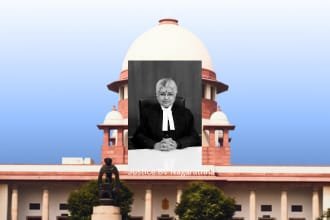
The Supreme Court of India has once again emphasized the need for courts to exercise care, caution, and pragmatism in dealing with allegations of matrimonial cruelty under Section 498A of the Indian Penal Code (IPC). In a recent judgment, the Court quashed criminal proceedings against a man who had been falsely implicated in a dowry harassment case, noting that the allegations made against him were vague, general, and lacking in specifics.
The ruling in Shobhit Kumar Mittal v. State of Uttar Pradesh, delivered on September 24, 2025, by a Bench of Justice BV Nagarathna and Justice R Mahadevan, underscores the principle that criminal law cannot be set into motion on the basis of general accusations.
Background of the Case
The case arose from a complaint lodged by a woman against her husband, her mother-in-law, and her brother-in-law (the appellant before the Supreme Court).
The complainant alleged that she was subjected to continuous harassment for dowry, which eventually caused her serious health issues, including a burst vein in her brain and partial paralysis of her right side.
Based on her allegations, an FIR was registered invoking the following provisions:
- Section 498A IPC (cruelty by husband or relatives of husband)
- Section 323 IPC (voluntarily causing hurt)
- Sections 3 and 4 of the Dowry Prohibition Act (giving or taking dowry, and penalty for demanding dowry)
The accused family members approached the Allahabad High Court seeking to quash the case. However, the High Court refused to intervene, prompting the brother-in-law (Shobhit Kumar Mittal) to file an appeal before the Supreme Court.
Supreme Court’s Observations
The Supreme Court carefully examined the allegations and concluded that the complaint against the appellant was devoid of specific details. The Court made several critical observations:
1. Courts Must Exercise Caution in Matrimonial Disputes
The Bench emphasized that while cases of genuine harassment must be dealt with firmly, courts must also guard against misuse of Section 498A IPC.
“Courts have to be careful and cautious in dealing with complaints and must take pragmatic realities into consideration while dealing with matrimonial disputes, where the allegations have to be scrutinized with great care and circumspection in order to prevent miscarriage of justice and abuse of process of law,” the Court observed.
2. Vague Allegations Are Insufficient
The Court noted that in cases of cruelty, there is usually a series of specific acts that constitute harassment. A complainant is expected to provide clear, detailed, and precise allegations.
“In cases involving allegations of cruelty and harassment, there would normally be a series of offending acts, which would be required to be spelt out by the complainant against perpetrators in specific terms. Therefore, mere general allegations of harassment without pointing out the specific details would not be sufficient to continue criminal proceedings against any person.”
3. No Link Between Harassment and Medical Condition
The Court also observed that the complainant had failed to establish any direct connection between the alleged harassment and her medical condition (nerve damage and paralysis).
“The term ‘cruelty’ cannot be established without specific instances. The tendency of invoking the aforesaid provisions, without mentioning any specific detail, weakens the case of the prosecution and casts serious aspersions on the probability of the version of the complainant,” the Bench stated.
4. FIR Lacked Specifics
The Supreme Court categorically held that the FIR in this case lacked concrete allegations that could justify criminal proceedings against the appellant.
“The FIR lacks concrete and precise allegations,” the Court said, while quashing the case against the brother-in-law.
Outcome of the Case
The Supreme Court set aside the Allahabad High Court’s refusal to quash the case and granted relief to the appellant, quashing the criminal proceedings against him.
Advocates Saurabh Soni, Maneesh Saxena, Anupam Singh, and Mannat Singh appeared for the appellant, while Advocates Vijendra Singh, Vikas Bansal, Apurva Singh, Devesh Kumar Mishra, and Vasasntha Kumar represented the State and the complainant.
Key Legal Principles Reaffirmed
This judgment reiterates several important principles of criminal law and matrimonial jurisprudence:
- Specific Allegations Are Essential
- Criminal complaints under Section 498A IPC must contain clear, detailed, and specific allegations. General accusations are not enough to invoke criminal prosecution.
- Protection Against Misuse of Section 498A
- While Section 498A was enacted to protect women from dowry harassment, it must not be misused to implicate relatives without substantive evidence.
- Pragmatism in Judicial Approach
- Courts must balance the need to address genuine cases of cruelty with the necessity of preventing harassment of innocent relatives.
- Scrutiny at the FIR Stage
- Even at the FIR stage, courts can intervene under Section 482 CrPC to prevent miscarriage of justice when allegations are vague or fabricated.
Broader Context: Misuse of Section 498A
The Supreme Court has, on multiple occasions, expressed concerns about the *misuse of Section 498A IPC. Earlier judgments such as *Rajesh Sharma v. State of Uttar Pradesh (2017) and Preeti Gupta v. State of Jharkhand (2010) highlighted the tendency of some complainants to drag in distant relatives of husbands without substantive proof.
This ruling adds to that line of jurisprudence, stressing that criminal law cannot become a tool for vengeance in matrimonial disputes.
Impact of the Judgment
The decision has significant implications:
- Relief for Innocent Relatives: Brothers-in-law, sisters-in-law, and elderly parents often face false allegations. This ruling reinforces their protection.
- Judicial Guidance: High Courts now have stronger backing to quash vague FIRs at an early stage.
- Balanced Approach: While genuine victims continue to receive protection, misuse of legal provisions will not be tolerated.
- *Strengthened Due Process: The case strengthens the idea that *due process and fair trial rights apply equally in matrimonial cases.
Conclusion
The Supreme Court’s ruling in Shobhit Kumar Mittal v. State of Uttar Pradesh marks another step towards ensuring that Section 498A IPC is not misused. By quashing proceedings based on vague and general allegations, the Court reinforced the principle that criminal liability must rest on specific and substantiated acts, not broad accusations.
This judgment strikes a delicate balance — while reaffirming the seriousness of dowry harassment cases, it protects innocent relatives from false implication and harassment through frivolous complaints.
Also Read