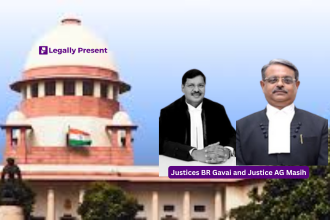
In a landmark moment for India’s long-troubled real estate sector, the Supreme Court of India has lauded the Enforcement Directorate (ED) for successfully ensuring the restitution of 213 flats to homebuyers who had been awaiting possession for more than a decade. The apex court commended the ED’s proactive efforts in restoring confidence in homebuyers’ rights and enforcing accountability among defaulting real estate developers.
This development represents a significant step in the ongoing struggle to protect consumer interests in India’s housing market — where lakhs of buyers have been trapped for years due to delayed or fraudulent projects.
The Supreme Court’s Observation
A Bench of the Supreme Court expressed strong appreciation for the Enforcement Directorate, observing that its interventions helped bring long-overdue relief to affected homebuyers. The court noted that the ED’s recovery and restitution drive showcased how effective coordination between investigative agencies and judicial authorities can yield tangible justice in economic offences.
The Court reportedly said that while criminal prosecution and financial penalties are important, actual restitution to victims — returning what was unlawfully withheld — is the true test of justice.
“The Enforcement Directorate’s success in restoring flats to homebuyers demonstrates that law enforcement can and should prioritize restitution alongside prosecution,” the Bench remarked.
The apex court’s recognition is particularly significant as it shifts the focus of justice in financial crimes from mere punishment to victim compensation and restitution — ensuring that citizens wronged by corporate misconduct get tangible relief.
Background: A Decade-Long Wait for Justice
The case involved a major real estate project where 213 homebuyers had booked flats nearly 12 years ago, investing their life savings with the developer. Despite full or substantial payments, the project was never completed, and possession was indefinitely delayed.
Following mounting complaints, the Enforcement Directorate initiated investigations under the Prevention of Money Laundering Act (PMLA), uncovering diversion of buyer funds into unrelated businesses. Acting under its statutory powers, the ED attached the project assets and worked toward recovery and restitution.
Ultimately, after judicial intervention and coordinated efforts with the Supreme Court-appointed committee, the flats were handed over to the rightful homebuyers, ending years of legal and emotional struggle.
What Makes This Case Stand Out
This case is unique for several reasons:
- Direct Restitution through Law Enforcement:
Instead of only pursuing prosecution, the ED actively ensured that victims received possession of their property — a rare outcome in financial crime cases. - Judicial-Law Enforcement Collaboration:
The Supreme Court and the ED worked in tandem, setting an example of how inter-agency coordination can produce timely justice. - Consumer-Centric Approach:
The judgment shifts attention toward victim restitution, highlighting that justice must restore not only legality but also human dignity and financial security. - Precedent for Future Cases:
The Court’s recognition may encourage the ED, CBI, and state enforcement bodies to adopt similar consumer-focused remedies in housing and financial scams.
Significance for India’s Real Estate Sector
1. Strengthening Accountability
The Supreme Court’s praise reinforces the message that developers who divert or misuse buyer funds will face stringent action — not only criminally but also financially. This could deter future frauds in the sector.
2. Empowering Homebuyers
The ruling boosts morale for thousands of homebuyers who remain trapped in stalled projects across India. The Court’s remarks affirm that buyers are not helpless victims but legally protected stakeholders with enforceable rights.
3. Institutional Confidence in ED
The Enforcement Directorate, often criticized for its investigative methods, gains a much-needed reputation boost. Its proactive role in recovering real assets, rather than just freezing accounts, demonstrates effective use of statutory powers for public benefit.
4. Restoring Faith in the Judicial System
By ensuring tangible restitution instead of prolonged litigation, this decision enhances public faith in the judiciary. Homebuyers who have waited years now see a concrete example that justice, though delayed, can still be delivered.
A Wider Pattern of Real Estate Litigation
India’s real estate sector has witnessed numerous instances of project delays, fund diversion, and builder insolvency, affecting millions of middle-class families. Some high-profile examples include the Amrapali, Unitech, and Jaypee Infratech cases — all of which reached the Supreme Court.
In the Amrapali Group case, the apex court ordered the cancellation of RERA registration, seizure of assets, and ED involvement for recovery. Thousands of buyers eventually got their flats through court-monitored construction.
The present case adds to that legacy, showing that with firm judicial oversight and empowered investigative agencies, justice for consumers is achievable even after years of delay.
The Legal Framework: ED’s Role under PMLA
Under the Prevention of Money Laundering Act (PMLA), 2002, the ED has the authority to:
- Attach and confiscate properties derived from criminal proceeds.
- Prosecute individuals involved in laundering or siphoning off funds.
- Assist courts in tracing and returning misappropriated assets.
In this instance, the ED’s action was not limited to freezing assets — it took a restorative approach, working toward the actual transfer of flats to their rightful owners.
This use of PMLA powers for consumer restitution rather than just penal action represents an evolving understanding of justice — one that places victims at the center of enforcement.
Expert Reactions
Legal Experts Welcome the Judgment
Senior Advocate Vikas Singh praised the Supreme Court’s approach, saying,
“The Court’s appreciation of the ED sets a powerful precedent. Enforcement must not end with prosecution — it must end with restitution. Homebuyers deserve outcomes, not just promises.”
Consumer Activists See Hope
Homebuyer rights groups, such as the Forum for People’s Collective Efforts (FPCE), hailed the decision as a “ray of hope” for thousands awaiting justice in stalled projects.
FPCE President Abhay Upadhyay noted,
“This is a victory not just for 213 families but for the concept of buyer protection in India. It shows that the system works when agencies act with purpose.”
Implications for Policy and Enforcement
The Supreme Court’s acknowledgment could influence future legislative and administrative reforms in India’s housing sector.
- Policy Shift Toward Restitution:
Regulators like RERA and enforcement agencies may prioritize returning assets to victims, rather than long-drawn criminal trials. - Increased Coordination Among Agencies:
ED, RERA, and state housing authorities could collaborate more closely on stalled or fraudulent projects. - Public Confidence in Law Enforcement:
The ED’s success demonstrates that the agency can be an instrument of justice for ordinary citizens — not just a tool for financial or political investigations. - Strengthening Homebuyer Protections:
The judgment may prompt stricter checks on fund diversion, escrow account compliance, and builder accountability.
Conclusion
The Supreme Court of India’s praise for the Enforcement Directorate marks a crucial turning point in the fight for homebuyer justice. For too long, delayed and fraudulent projects have symbolized the helplessness of the common citizen against powerful developers.
This case proves that when investigative agencies act with commitment and courts monitor with vigilance, justice can take concrete shape — in this case, 213 restored homes.
The Supreme Court’s words echo a broader message: justice is not just about punishing the wrongdoer — it is about restoring what was lost.
As the real estate landscape evolves under stricter scrutiny, this case sets a precedent for future enforcement — reminding both builders and regulators that accountability is the foundation of trust, and restitution is the ultimate form of justice.
Also Read
Madras High Court Imposes ₹50,000 Cost for Filing Frivolous Public Interest Litigation